
How Labs Conducts Keyboard Testing
How Labs Conducts Keyboard Testing
### Behind the Clicks: The Ultimate Keyboard Testing Gauntlet
Ever wonder what separates a high-performance gaming keyboard from a standard office model? While marketing buzzwords like “ultra-responsive” and “durable” are thrown around, the real difference is revealed in the lab. Professional keyboard testing is a rigorous, scientific process designed to push these devices to their absolute limits, translating subjective feel into objective data. Let’s pull back the curtain and see exactly how labs conduct these critical evaluations.
#### The Durability Torture Test: Millions of Clicks
The most common claim made by manufacturers is switch lifespan, often rated in the tens of millions of keystrokes. Labs don’t take their word for it. They use custom-built machines equipped with robotic actuators. These “typing robots” are programmed to press individual keys or groups of keys repeatedly, 24/7, at a consistent force and speed.
The machine logs every single actuation. The test continues until the switch fails, which could mean it stops registering, registers multiple times (known as “chattering”), or the physical feel degrades beyond a set tolerance. This process validates, or debunks, the 50-million or 100-million click lifespans advertised on the box.
#### Measuring Speed: Latency and Rollover
In competitive gaming, milliseconds matter. That’s why latency testing is paramount. To measure this, labs use a combination of high-speed cameras and specialized hardware. An oscilloscope is connected to the keyboard’s circuitry to detect the exact moment an electrical signal is sent. Simultaneously, a high-speed camera records the physical keypress. By syncing these two data streams, testers can measure the precise delay—the input lag—between the physical action and the digital signal.
Equally important are N-Key Rollover (NKRO) and anti-ghosting tests. NKRO means each keypress is registered independently, allowing you to press as many keys as you want simultaneously. Testers use software and hardware jigs that can press dozens of keys at once in various combinations to ensure every single one is detected correctly, without any “ghost” keys being registered by mistake.
#### The Science of Feel and Sound
How a keyboard “feels” is subjective, but its mechanical properties are not. Labs quantify this using a force gauge. This device presses down on a key switch and plots a force-travel curve on a graph. This graph is a switch’s unique fingerprint, revealing several key data points:
* **Actuation Force:** The exact amount of force (in grams) needed to register a keystroke.
* **Actuation Point:** The distance the key travels before it registers.
* **Tactile Point:** For tactile switches, the graph shows the “bump” and the force required to overcome it.
* **Bottom-Out Force:** The force required to press the key all the way down.
To analyze a keyboard’s sound profile, tests are conducted in a sound-dampened room or anechoic chamber using a high-quality, calibrated microphone. Testers record standardized typing sessions to capture the unique “thock,” “clack,” or “click” of the switches. This audio is then analyzed for its decibel level and frequency, providing an objective comparison of how loud or deep different keyboards are.
#### Build Quality and Illumination
A keyboard is more than just its switches. The chassis itself undergoes a stress test. A common procedure is the flex test, where the keyboard is supported at both ends and a specific weight is applied to the center. A sensor measures the amount of deflection, or bend, in millimeters. Less flex generally indicates a more robust and premium build. Keycap stability is also measured by checking for wobble using a precision tool.
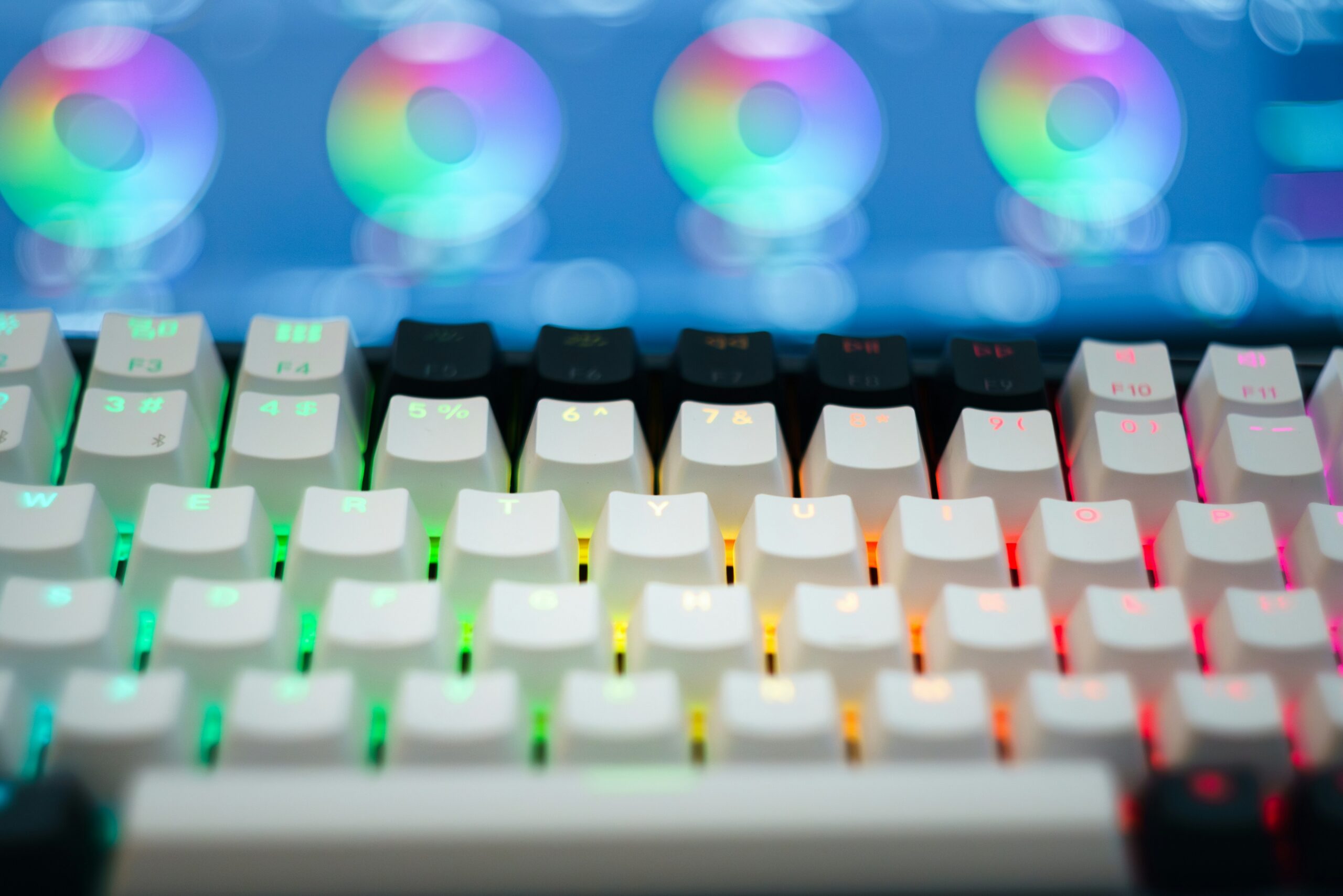
Finally, for RGB-enabled keyboards, the backlighting is scrutinized. Using a spectrometer or colorimeter, testers measure:
* **Brightness:** The maximum luminance (in nits or lux) the lighting can achieve.
* **Color Accuracy:** How well the keyboard reproduces colors, especially a pure white.
* **Uniformity:** Whether the lighting is even across the entire keycap legend and consistent from one key to the next.
By combining these meticulous tests, labs create a complete, data-driven picture of a keyboard’s performance, durability, and quality, empowering consumers to make choices based on hard evidence rather than just marketing hype.