
Level S4 solar radiation event
Level S4 solar radiation event
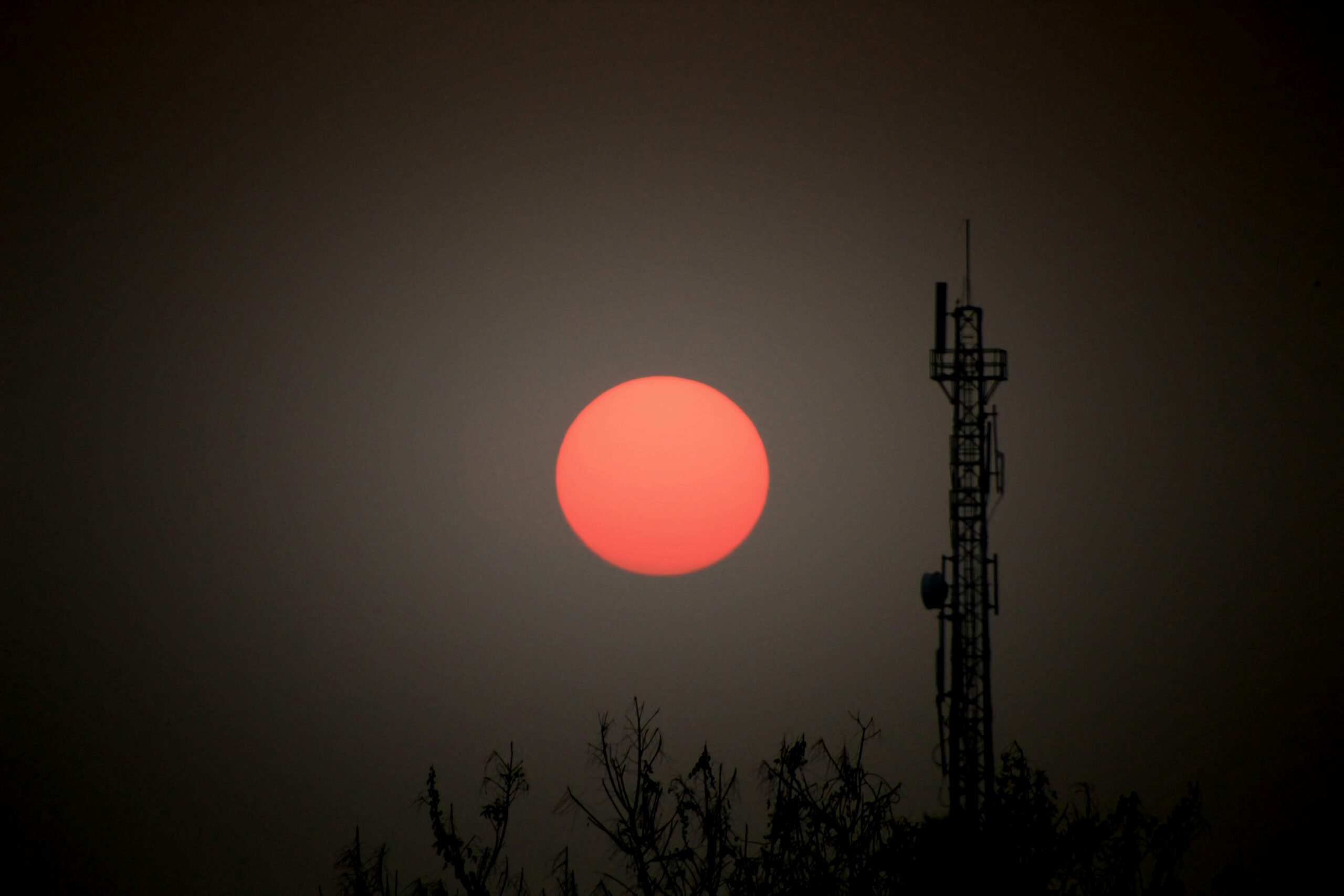
### Code Red in Orbit: What is an S4 Solar Radiation Storm?
We often think of the Sun as a steady, life-giving star, a predictable presence in our sky. But our star is a dynamic and sometimes violent celestial body. It can unleash colossal bursts of energy and matter, creating “space weather” that can have profound effects on Earth. One of the most significant of these phenomena is a solar radiation storm, and when one reaches a level S4, it’s a major event for our technologically-dependent civilization.
#### What is a Solar Radiation Storm?
First, let’s break down the term. A solar radiation storm, also known as a Solar Proton Event (SPE), occurs when a massive explosion on the Sun—either a solar flare or a Coronal Mass Ejection (CME)—accelerates a flood of energetic particles, primarily protons, out into space at incredible speeds. While a CME cloud of plasma may take days to reach Earth, these protons can travel at near the speed of light, arriving in as little as 30 minutes.
Earth’s magnetic field does an excellent job of protecting us on the surface from these particles. However, it funnels them towards the polar regions, which is where their effects are most strongly felt.
#### The S-Scale: Measuring the Intensity
To help us understand and prepare for these events, the NOAA Space Weather Prediction Center (SWPC) uses a five-level scale, from S1 (Minor) to S5 (Extreme). An S4 event is officially categorized as **”Severe.”**
This isn’t a classification to be taken lightly. Each level on the scale corresponds to a specific measurement of energetic proton flux near Earth. For an S4 storm, the flux of protons with an energy of 10 MeV (Mega-electron Volts) reaches 10,000 proton flux units (pfu). But what does that actually mean in terms of impact?
#### The Real-World Impacts of an S4 Storm
An S4 solar radiation storm poses a significant threat, primarily to technology and humans operating above the protective blanket of our atmosphere.
**1. Danger to Astronauts:** This is the most critical human-safety concern. For astronauts on a spacewalk (Extra-Vehicular Activity or EVA), the radiation dose from an S4 event could be extremely high, potentially life-threatening. All EVAs would be terminated immediately, and even within the relatively shielded confines of the International Space Station, astronauts would move to the most protected areas to ride out the storm. The famous August 1972 solar event, which would have been rated S4/S5, occurred between the Apollo 16 and 17 missions. Had it happened during a mission, it could have been fatal for the astronauts on the Moon.
**2. Aviation Disruption:** Passengers and crew on commercial flights, particularly those flying polar routes, would be exposed to significantly increased radiation levels. To mitigate this risk, airlines would be forced to reroute flights to lower latitudes, away from the concentrated particle streams over the poles. This leads to longer flight times, increased fuel consumption, and significant logistical challenges.
**3. Satellite Mayhem:** Our orbital infrastructure is highly vulnerable. The high-energy protons can wreak havoc on satellite electronics. They can cause:
* **Single-Event Upsets (SEUs):** The particles can flip bits in a satellite’s memory, causing data corruption and commanding errors.
* **Solar Panel Degradation:** The constant bombardment can permanently damage solar panels, reducing a satellite’s power and shortening its operational lifespan.
* **System Noise and Damage:** Sensitive imaging systems can be overwhelmed with “snow,” rendering them temporarily useless. In severe cases, components can be permanently damaged.
* **Loss of Orientation:** Star trackers, which satellites use to determine their orientation in space, can be blinded by the proton storm, causing the satellite to lose its lock on its position.
**4. High-Frequency (HF) Radio Blackout:** The storm causes intense ionization in the upper atmosphere over the polar regions. This completely absorbs HF radio signals, leading to a polar cap absorption event. For days, all HF communication used by trans-polar flights and ships in the area would be blacked out.
#### How Often Do They Happen?
Fortunately, S4 events are not a daily occurrence. On average, we can expect about three S4-level storms per 11-year solar cycle. They are most common around the solar maximum, the peak of the Sun’s activity cycle. While rare, they happen frequently enough that satellite operators, airlines, and space agencies have robust plans in place to handle them. Events like the “Bastille Day Event” of July 2000 and the infamous Halloween Storms of 2003 included severe radiation storms that caused real-world satellite damage and forced the rerouting of aircraft.
In our interconnected world, an S4 solar radiation storm is a stark reminder that we are not isolated from the cosmos. It’s a powerful, invisible force that can disrupt our most advanced technologies and poses a genuine risk to humans in space and the upper atmosphere, reinforcing the critical need for continuous space weather monitoring.